
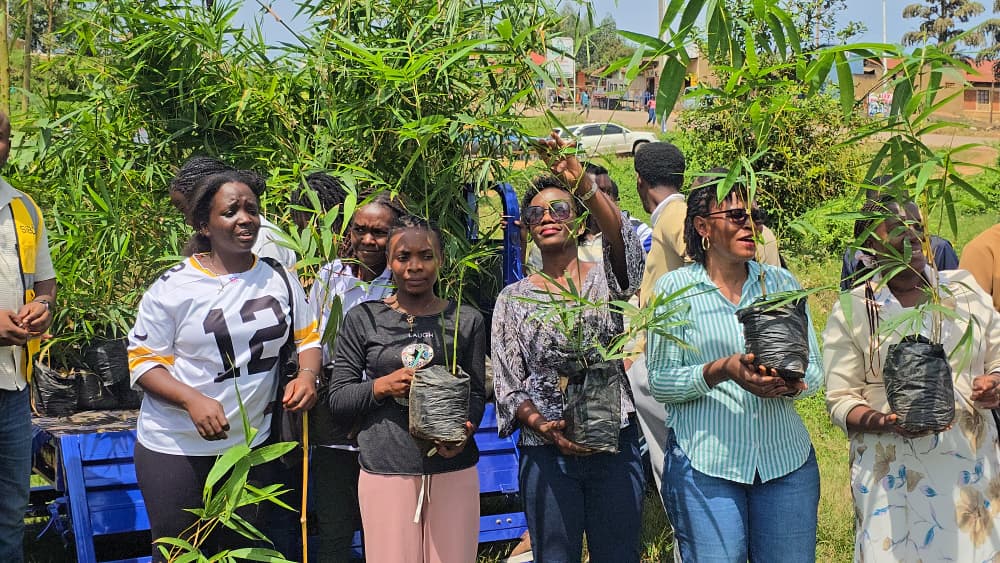
Mbarara University of Science and Technology (MUST) has launched an intensive innovation bootcamp aimed at developing sustainable solutions to protect River Rwizi, one of South Western Uganda’s most important but increasingly degraded water sources.
The initiative is part of the Institutional University Cooperation project titled, “University as Facilitator: Community-Based Sustainable Solutions to Demographic Challenges in South Western Uganda,” a collaborative programme that brings together academia, communities, and development partners to address environmental and social challenges.
The five-day bootcamp has attracted students, young innovators, and technology enthusiasts tasked with designing practical, scalable solutions to restore the river’s ecosystem.
A key early intervention includes bamboo planting along riverbanks to reduce soil erosion and stabilise degraded sections.
Participants are being trained in design thinking and the lean business canvas model to help them develop and pitch viable eco-entrepreneurship ideas targeting major threats to the river, including agricultural runoff, siltation, and industrial waste discharge.
Lecturer Sarah Nabachwa said the programme is helping young people translate environmental concern into structured, implementable solutions.
“These young minds are learning how to structure their passion into viable business models. Combining hands-on conservation like bamboo planting with digital tech solutions is exactly how we change the mindset of the community surrounding the Rwizi,” she said.
Deputy Dean of the Faculty of Interdisciplinary Studies at MUST, Cleophas Kansiime, said the initiative marks a shift from theory to practical environmental action.
“We cannot sit back while our primary water source disappears. We are teaching students to see environmental degradation not just as a crisis, but as an opportunity for sustainable innovation,” he said.
The River Rwizi, which supports an estimated 2.5 million people and sustains key regional economic activities, is under severe pressure from climate change, population growth, and human encroachment.
At Kreative Campus, programme leader Sankara Magezi said the bootcamp is designed to give young innovators the freedom to experiment and develop context-specific solutions.
“Innovation thrives when young people are given the tools and space to fail, iterate, and build,” he said.
Private sector representatives also emphasized their role in environmental conservation. The Regional Manager of the Private Sector Foundation Uganda (PSFU), Jackline Kansiime Umwiza, said business sustainability is directly tied to environmental protection.
“If River Rwizi dries up, regional industries collapse. Supporting youth-led eco-ventures ensures we are investing in long-term solutions that protect both our environment and business ecosystem,” she said.
She added that stronger sensitisation programmes are needed to prevent environmental degradation driven by unchecked development along riverbanks.
Participants said the bootcamp has given them both a sense of ownership and responsibility toward environmental protection.
“We are not just planting trees; we are designing businesses that can employ us while saving the river we grew up with,” said innovator Bethias Akansasira.
By the end of the programme, participants are expected to develop working prototypes that will be refined into real-world projects aimed at supporting livelihoods in communities within the cattle corridor while restoring the River Rwizi ecosystem.
